

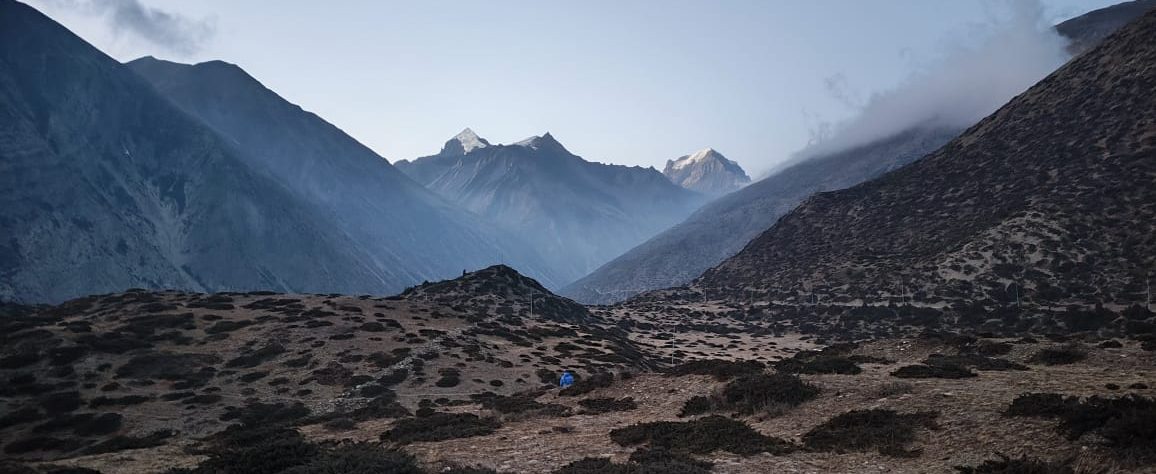
Selection of latrine sites by Himalayan musk deer (Moschus leucogaster) in Neshyang Valley, Annapurna Conservation Area, Nepal

ABSTRACT Musk deer is threatened by poaching for musk pod and habitat fragmentation. The species is endangered within its distribution range including Nepal, Bhutan, India, Pakistan, Mongolia, China, Korea and Russia. In Nepal, the deer is confined to protected areas throughout the Himalaya. It is a solitary and shy forest dweller with a crepuscular activity […]

Read More →

Multiple vegetation layers interactively enhance habitat values of endangered Kashmir Musk Deer

Global Ecology and Conservation Abstract The Kashmir musk deer (Moschus cupreus) is a globally endangered species hunted for its musk pod. Despite its endangered status, it remains one of the least studied species of musk deer. In 2019, the genetic discovery of Kashmir musk deer in Mustang district of Nepal – outside of its historically […]

Read More →

Decades of leopard coexistence in the Himalayas driven by ecological dynamics, not climate change

Global Ecology and Conservation Abstract The interaction between two predators in overlapping habitats with distinct habitat requirements poses critical challenges for conservation and management strategies. This study explores the ecological dynamics and coexistence of common leopards (Panthera pardus) and snow leopards (Panthera uncia) in the Himalayan regions, explicitly focusing on their spatial and temporal distribution […]

Read More →

Contrasting patterns of alpine biodiversity across mountains and taxa worldwide

Nature Communications Abstract The alpine biome, located at higher elevations of mountains worldwide, supports unique biodiversity and provides important ecosystem contributions to people. Despite the growing recognition of mountain biodiversity in international policy frameworks, substantial gaps remain in our understanding of how alpine biodiversity varies across mountain systems, undermining estimates of its conservation value and […]

Read More →